Chess Master: Board Game
- 4.8
- Rating
- 10.00M
- Installs
- Free
- Price

 Analysis by App-foxy
I spent time with Chess Master: Board Game as a straightforward way to play chess on a phone, and my first impression was clear: this is aimed at people who want the game itself without having to commit to a larger chess platform. It is a free board game from One Way Street Entertainment, available for Android, with an Everyone age rating. The simple store summary says “Become a chess master,” but the more useful question is whether it gives you enough value for casual practice, quick matches, and regular improvement.
My answer is mostly yes, with an important qualification. A chess app can be enjoyable even when it is not the most complete learning tool available. This one makes the most sense when you want chess to be easy to open and play, rather than when you need a detailed training course, a serious tournament environment, or a large social community. That distinction matters because the usual alternatives range from minimalist offline boards to feature-heavy online chess services, and each serves a different kind of player.
What Chess Master: Board Game offers in everyday use
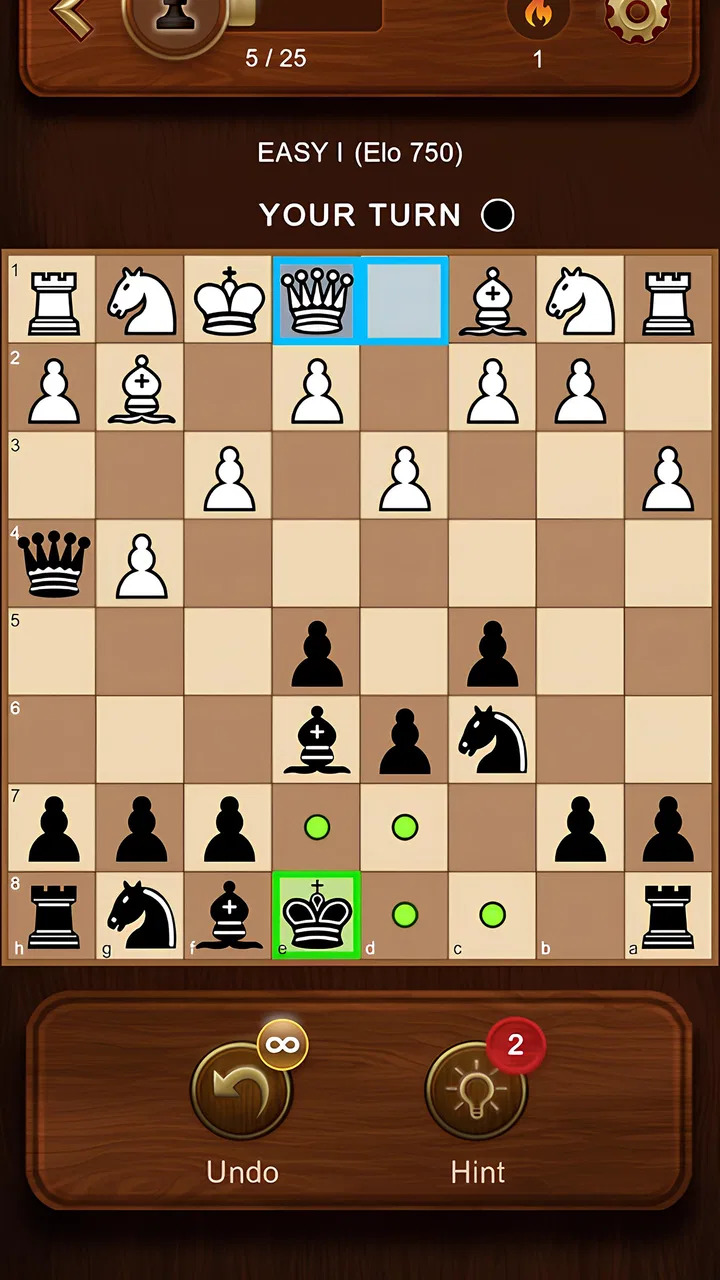
The game belongs to the board-game category, and its focus is refreshingly narrow: chess. I like that focus because it removes the distraction found in apps that combine puzzles, lessons, live events, clubs, chat, rankings, and several other systems around the board. If your goal is simply to sit down and think through a position, a dedicated chess title can feel less demanding than a full chess ecosystem.
You May Also Like

 Pandora - Music & Podcasts
Pandora’s Music Is Easy to Start, but Harder to Recover
Pandora’s strength is its low-effort path from a seed to a station. Its weak spot is how much confidence it asks you to place in connection, setup, and quiet recovery.

 8 Ball Pool
 Is Built on Rivalries, Rematches, and Routine
A close look at the rivalries, rematches, shared routines, and unanswered safety questions that turn a quick pool match into a persistent mobile community.

 Samsung Music
’s Quiet Strength Is Playing What You Already Own
Its reach comes less from spectacle than from dependable access to a personal library. That simplicity is both the app’s strongest retention engine and its ceiling.

 AccuWeather: Weather Radar
AccuWeather Review: A Quick, Clear Forecast for Everyday Decisions
For everyday plans, the best forecast is the one you can understand quickly. AccuWeather makes rain timing, radar, and local conditions easy to act on, with a few trade-offs.

 Hill Climb Racing
Why Hill Climb Racing Still Turns Crashes Into One More Run
A tiny car, a bumpy hill and one more upgrade: Hill Climb Racing keeps resurfacing because its simple chaos makes every near-miss feel personal.

 AliExpress - Shopping App
AliExpress Makes Global Shopping Feel Personal, but Shoppers Bear the Risk
AliExpress turns a global marketplace into a pocket-sized discovery engine. Its reach is useful, its shopping loop compelling, and its trade-offs easy to miss.
More From Our News Desk
View All News


It is currently free, so there is no purchase decision before trying it. That is the clearest part of its value proposition: you can test whether its presentation and play style suit you without paying an entry fee. Free access does not automatically make an app good, of course, but it changes the risk. For a newcomer, a short trial session is enough to decide whether the board feels comfortable and whether the game fits into a daily routine.
The public response is strong. The game has an average rating of 4.8 from around 283 thousand ratings, with roughly 1.8 thousand written reviews, and it has passed 10 million installs. Those figures do not replace personal testing, but they do suggest that the app has reached a broad audience and that many players find its basic experience satisfying. I would treat that popularity as reassurance rather than proof that it will meet the needs of advanced players.
One practical detail is its compatibility range. The current version is 11.49, and it runs on Android 7.0 or later. That makes it accessible on many older Android devices, which is useful if you want a chess board on a secondary phone or a device that is no longer running the newest system software. I would still check the app’s behavior on your particular phone, especially if you rely on an older model for long sessions, because compatibility alone does not tell you how responsive the interface will feel.
A useful role for short practice sessions
Chess is often easier to maintain as a habit when the barrier to starting is low. I can imagine opening this game during a commute, while waiting for an appointment, or after dinner when I want something more thoughtful than a quick arcade distraction. A short session can be useful even if I do not finish a long game. The board gives me a contained activity: I can focus on one position, make a decision, and stop before the evening disappears.
That makes it different from watching chess content or reading an opening guide. Those activities can teach ideas, but they are passive unless I immediately apply them. Playing forces me to notice loose pieces, check threats, and consider what the opponent might do next. Even a casual game can expose a recurring mistake more effectively than memorizing a list of moves.
My advice is to use it with a small purpose instead of launching every game with the vague goal of “getting better.” Before starting, choose one thing to watch for: developing pieces, protecting the king, avoiding unnecessary pawn moves, or checking the opponent’s threats before each move. This turns an ordinary match into a lightweight exercise and does not require a separate notebook or a complicated training plan.
Where the free price helps, and where it does not answer everything
Because the game is free, it is easy to recommend as a low-risk first step for someone returning to chess. A parent can let a child explore a familiar board game, a beginner can find out whether digital chess feels comfortable, and an occasional player can keep it available for moments when a physical board is inconvenient. The Everyone rating also makes it suitable for a broad audience in terms of age classification.
Still, free access should not be confused with unlimited value for every type of player. If you are comparing it with a paid chess course, a physical tournament set, or a subscription service, the question is not simply “Which costs less?” It is “What am I trying to receive?” This game’s strongest value is convenient play. A paid lesson product may be better for structured instruction, while a physical board may be better for two people sharing the same table. Since there is no purchase price to weigh here, the trade-off is mainly about depth, tools, and the time you are willing to invest.
I also would not assume that a high rating means the app replaces every other chess resource. Ratings usually reflect whether people enjoy the product as a whole, not whether it includes the exact analysis or coaching features that an ambitious tournament player needs. For a beginner, a clean playing experience may be enough. For an experienced player, the absence of advanced study tools could matter much more than the free price.
How I would use it to get more than a series of random games
The easiest way to waste a chess app is to play repeatedly without reviewing your decisions. Even without turning the experience into formal study, I would use a simple three-step routine. First, play a game with one clear focus. Second, immediately identify the moment when the position became uncomfortable. Third, replay that moment and ask what information I ignored. This is more valuable than judging the whole game only by whether I won or lost.
A second useful habit is to pause before every capture. Many casual errors happen because a piece appears to be free, so the player takes it without checking the recapture or the opponent’s stronger threat. Making myself scan checks, captures, and attacks before moving is a small discipline that works well on a mobile board. It also keeps the game useful when I have no time for a full lesson.
A third approach is to use different sessions for different purposes. One game can be played slowly, with attention to planning. Another can be treated as a quick decision exercise, where I accept that mistakes will happen and concentrate on recognizing danger early. Separating those goals prevents a rushed game from making me think I have learned nothing. It also gives a casual app a more deliberate role in an improvement routine.
Trade-offs compared with the usual chess alternatives
Compared with a physical chess set, this game wins on portability and readiness. I do not need a table, a second person beside me, or space to leave a position set up. That is valuable for solo play and for irregular schedules. The physical board still has advantages: pieces are easier to share with another person, the experience is more social, and many learners understand positions better when they can see the whole board away from a small screen.
Compared with a broad online chess platform, this title is more appealing if I want less surrounding activity. Large platforms are usually the better choice for players seeking an active opponent pool, public ratings, clubs, lessons, puzzles, or detailed game analysis. They can also feel busy, and a player who only wants a quiet board may find the extra layers distracting. Chess Master: Board Game is the more sensible starting point when simplicity matters more than a complete online identity.
Compared with a dedicated chess-training app, it is likely to be a better fit for practice through play than for a carefully sequenced curriculum. A training-focused alternative is preferable if you want explanations after every mistake, themed exercises, opening preparation, or a measurable study path. I would not choose this game alone as my entire improvement system if I were preparing for serious competition. I would use it as the place where I apply ideas between more structured study sessions.
There is also a social trade-off. Playing against another person on a shared physical board can create a different kind of attention and conversation. A digital game is more convenient, but convenience can make it easier to play mechanically or abandon a position when I become impatient. If your main reason for playing chess is spending time with someone face to face, a phone game is not the best substitute for a real board.
Who will get the most value from it
I think the strongest audience is the casual or returning player. If you learned the rules years ago but rarely play, this offers a low-pressure way to rebuild the habit. It is also a reasonable option for beginners who understand how the pieces move and now need repeated practice seeing threats. The free price makes experimentation painless, while the broad age rating keeps the app approachable for families looking for a simple board game.
It can also suit people who already own a more advanced chess app but want a separate, uncomplicated place for ordinary games. Keeping casual play away from serious analysis can be helpful. I do not always want to turn a ten-minute break into a study session, and a focused board game can serve that lighter purpose.
For a realistic everyday scenario, imagine having fifteen minutes before leaving for work. Instead of beginning a game you cannot finish, use that time to replay a familiar opening position or play only until a clear tactical decision appears. Later, return to the position with a fresh mind. The value is not in forcing a complete match into an inconvenient gap; it is in using the app as a flexible chess board that fits around your schedule.
Families may also appreciate the chance to put chess on a device that is already available, rather than buying another dedicated game. I would still encourage an adult to play alongside a younger beginner at first. The app can provide the board and turns, but personal explanation is often what helps a child understand why a move is dangerous or why developing a piece matters.
Who should skip it or choose something else
I would look elsewhere if your main goal is competitive online play with a large, active community. In that situation, you need an environment built around finding opponents, tracking performance, and studying completed games. A focused board game may feel too limited even if its basic chess experience is enjoyable.
I would also hesitate to rely on it as the only tool for serious improvement. Players preparing for tournaments usually benefit from deeper analysis, opening databases, endgame practice, and a way to review mistakes in detail. If those features are central to your plan, choose a specialist training or online chess service and use this game only as an additional practice option.
It may not be ideal for someone who wants a strong two-player living-room experience either. A physical set remains better when the point is conversation, shared concentration, and moving pieces with another person. The phone is convenient, but it changes the atmosphere.
Finally, if you dislike repeating games without clear feedback, you may become frustrated unless you create your own review routine. A chess app can provide opportunities to practice, but improvement depends on what you do with those opportunities. I would not install it expecting the app alone to transform my play.
My verdict on the free value
Chess Master: Board Game is worth trying when you want free, accessible chess practice without committing to a larger chess service. Its strongest qualities are its focused purpose, broad accessibility, and low barrier to entry. The large install base and high average rating support the impression that it works well for many everyday players, though they should not be read as a promise of advanced competitive features.
I would recommend it to a beginner, a casual player, a family member learning the game, or anyone who wants a portable board for short sessions. I would skip it as a primary choice if I needed a serious online community, intensive coaching, or tournament-level analysis. In those cases, another kind of chess product would offer better value even if it involved a different cost model.
For me, the right way to judge this game is not by asking whether it contains every chess feature imaginable. It is by asking whether I can open it easily, play with attention, and return to the board when I have a few spare minutes. If that is what you need, the free download makes the decision simple: give it a fair trial, use each game with a small learning goal, and keep it only if its focused approach matches the way you actually play.
FAQs for Chess Master: Board Game
01What platforms is Chess Master: Board Game available on?
Chess Master: Board Game is available for download on both Android and iOS platforms. You can easily find it on the Google Play Store for Android devices and the Apple App Store for iOS devices. Ensure your device meets the minimum system requirements for an optimal experience.
02Does Chess Master: Board Game offer multiplayer features?
Yes, Chess Master: Board Game includes multiplayer features, allowing you to play against friends or compete with players worldwide. You can engage in real-time matches or take turns at your convenience. The game also supports local multiplayer, so you can play with someone using the same device.
03Are there any in-app purchases in Chess Master: Board Game?
Chess Master: Board Game offers in-app purchases for various features such as premium chess boards, exclusive pieces, and hints to improve your gameplay. While the basic version is free, these optional purchases can enhance your experience, though they are not necessary to enjoy the full game.
04What level of difficulty can I expect in Chess Master: Board Game?
Chess Master: Board Game caters to all skill levels, offering various difficulty settings from beginner to grandmaster. The AI is designed to challenge players appropriately at each level, providing a rewarding experience whether you're learning the basics or honing advanced strategies.
05Does Chess Master: Board Game require an internet connection?
Chess Master: Board Game can be played offline, allowing users to enjoy solo matches against the AI without an internet connection. However, an internet connection is required to access multiplayer features and participate in online tournaments, ensuring a competitive and connected experience.
Pros
- Engaging tutorials for beginners.
- Smooth and intuitive user interface.
- Variety of difficulty levels.
- Offline play available.
- Detailed analysis of every game.
Cons
- Ads can be intrusive at times.
- Limited custom board themes.
- No multiplayer chat feature.
- Requires internet for updates.
- Some features behind paywall.

Chess Master: Board Game
Gallery